· 4 min read · Harshala Rani
Men and women are definitely not the same.
No offense, but this isn’t the feminism conversation you’re expecting.
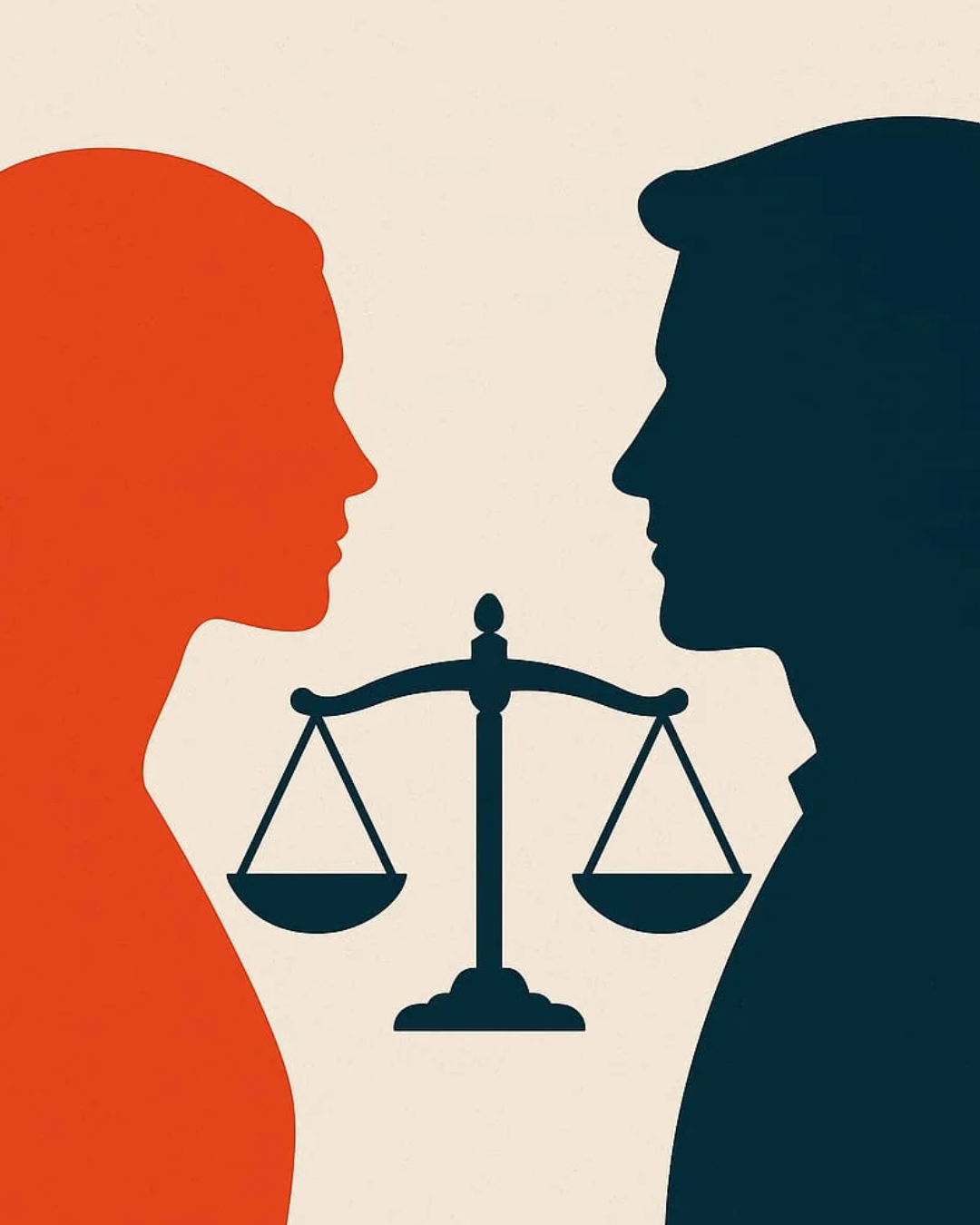
Life didn’t begin with two sexes.
The earliest forms of life reproduced asexually — one organism simply splitting into two. Efficient and low effort.But there was a catch: almost no genetic variety.
Which meant when conditions changed or diseases showed up, entire populations could get wiped out in one go. As life became more complex, evolution went, “Yeah… this isn’t going to work long-term.”
So it came up with a better solution — sexual reproduction. Mixing genes meant variation, and variation meant survival.
With sexual reproduction came a natural split.
Producing reproductive cells costs energy, so evolution divided the job into two complementary roles. One body evolved to produce many small, fast-moving cells designed to compete and reach the other-sperms. The other evolved to produce fewer, larger cells packed with energy to support early life-eggs.
These two roles didn’t stay limited to reproduction. Over time, they shaped everything else — hormones, body structure, metabolism, recovery, even stress response.
One body(male) evolved more toward speed, strength, and short bursts of effort.
The other(female) toward endurance, regulation, and sustaining life over time.
Hormones followed the same logic.
So what we call male and female today aren’t social inventions or arbitrary categories. They’re the result of evolution choosing two different but cooperative strategies — not to be the same, but to work together to keep life going.
Which brings me to the uncomfortable question:
How do we demand equality between two individuals who are biologically built different and optimized for different roles?
Before anyone jumps — no, I’m not saying women didn’t get fewer opportunities for centuries. That part is obvious and very real.
And yes, that is changing. Slowly. Painfully slowly. But changing.
You see women everywhere now — in spaces that were once aggressively male-dominated. And that’s a good thing.
Asking for equal opportunities is absolutely valid.
A man doing things considered “feminine” isn’t wrong.A woman doing things presumed to be “for men” isn’t wrong either.
And just to be clear — I’m not talking about societal expectations.Not about “men should earn” or “women should cook.”Not about safety issues, judgment, clothing, or freedom- all of which are very real problems.
Put all of that aside for a moment.
I’m talking purely about biology, how we are built, hormonally regulated, and optimized.
Differences shouldn’t lead to the oppression of one by the other. Differences shouldn’t make one inferior to the other.
Difference = biological reality
Biology doesn’t operate on fairness.It operates on optimization and trade-offs. Men and women are equally valuable.
Not equally built.Not equally hormonally regulated. Not optimized for the same challenges.
Men generally have more testosterone,which helps with muscle mass, bone density, strength, and explosive power. It pushes the body toward action: risk-taking, quick reactions, short bursts of intense effort. Which is why men, on average, find tasks involving power, speed, or high-pressure focus a bit easier.
Women are more influenced by estrogen and progesterone, hormones that support endurance, flexibility, recovery, and balance. They help manage energy over longer periods, tolerate stress better, and recover faster. They also play a role in emotional awareness and connection. Which is why women often do better in sustained effort, adaptability, multitasking, and long-term decision-making.
Different strengths. Same value.Evolution didn’t mess up here — it optimized.
These days, feminism is often used to push slogans like “Women are the future” or “Women are men.” But that isn’t feminism and this misuse is exactly why the word attracts so much hate.It’s very easy for people like you and me to misunderstand what feminism actually means when we’re constantly surrounded by such slogans.
At its core, feminism is a movement that challenges patriarchal systems and works to end sexism, discrimination, and gender-based violence, aiming to ensure equal rights, opportunities, and fair treatment for all genders. And it’s important to remember: feminism never claims that women and men are the same.
Now, why am I writing this at all?
Because I recently started my fitness journey.
And sometimes,despite putting in equal effort, I notice my male friends progressing faster at certain things. Lifting heavier. Sprinting harder. Recovering quicker from specific workouts.
And honestly? That used to annoy me.
But then I realised, this isn’t a personal failure. It’s biology doing its thing.
Take competitions like Hyrox. Look at the weight categories. Women lift lighter weights than men. Does that mean women are weak? Obviously not. It means men are built in a way that makes those specific tasks easier for them.
And yet — women still show up.
We still compete. We still push through, even when it’s harder.
Just because it’s easier for them doesn’t mean we sit quietly and opt out.
That’s why I believe in asking for equal opportunities, not forced equality.
We are not equal. We are not superior or inferior.
We are just different.
And honestly? Embracing that difference has been more freeing than fighting it.